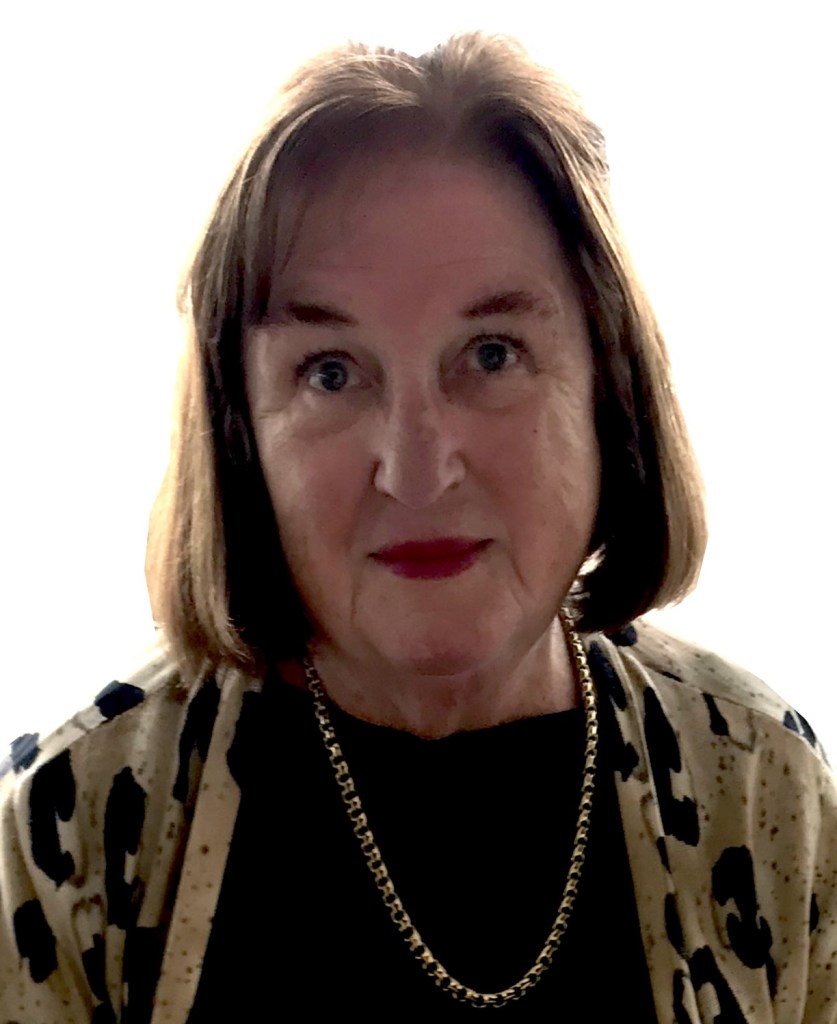
Vivian Shipley has been published in PRAIRIE SCHOONER: From the Archive: 98 Years of WRITERS ON WRITING. Her poem, A Poetry Reading in Connecticut
For Charlotte Mew, 1867–1928 is one of her all time favorites.
A Poetry Reading in Connecticut
For Charlotte Mew, 1867–1928
Eeling in the back of R. J. Julia’s Booksellers because my socks
don’t match, I head for the cushioned seat under the bay window
so I can tuck my feet up. It’s August, my face is pale as a tulip
bulb, but next week, I’ll stalk, Alida Monro’s description of you
entering her Poetry Bookshop. Voice narrowing to a wire when
asked if, in fact, you were Charlotte Mew, you answered, I am
sorry to say I am. My signature’s not painted on R. J. Julia’s
wood floors like other poets; I mutter your line: To the larks that
cannot praise us, knowing nothing of what we do. Here with me,
helmeted in felt pork-pie hat, head cocked, Charlotte, you would
unfurl a horn-handled umbrella held under your arm, not to ward
off rain congealing to Bloomsbury pudding, but to defy Volvos,
BMWs curbed on US 1 in Madison. A rough-edged shard, not
smooth as sea glass or the even tans at the Surf Club, you had no
enclave like Emily Dickinson or A Room of One’s Own upstairs
in R. J. Julia’s loft. No retreat from caring, a mother who made
you starch curtains, stitch covers for chairs. No white dress, you
had coal to haul, floors and clothes to scrub. Asylumed for life,
faces of younger sister and brother imprinted by your daily visits
held you to a vow of chastity. I picture you writing novels,
heartfelt, but stilted, seen by your other sister, Anne, so hungry
she thumbs motes of cracker into her mouth. Almost fifty
before you published your first book, The Farmer’s Bride,
in 1916, with lines in the sweet-briar air that lift me like wings
of a monarch, your words the pollen gilding my fingers. You cut
off hope of love, though not the ache. Did Thomas Hardy copy
Fin de Fête on a British Museum Reading Room slip because
the poem was for him? At the burial of his ashes in Westminster
Abbey, surely you whispered, Sweetheart, for such a day/ One
mustn’t grudge the score;/ Here, then, it’s all to pay,/ It’s Good-
night at the door. Woven or caught in a braid of love, darkness
grew like a cataract filming your eyes. A life you could not shed
like skin: a nursing home in Beaumont Street with no outlook,
the room in back, a high grey brick wall blocking sunlight, stars.
With only occasional pigeons as company, you longed for a visit
from anyone, even men picking up trash. Lost, you were useless
as nets beaten into a frazzle, frayed by mussel shells and clogged
with seaweed. Through a gauze of over seventy years, Charlotte,
life looks softer removed from the mesh of a real body. Even ink
has faded on the death certificate that says you died by your own
hand while of unsound mind on March 23, 1928. So many years
of cleaning, your hands were numb, but not your throat when
Lysol, a comet shooting through you, left a tail of pain curling
like a tongue, licking at what would soon no longer be there.
In coves of Long Island Sound, who can say why a place resists
freezing. Undercurrents, perhaps, like ones in “Fame”: A blot
upon the night,/ The moon’s dropped child!, short lines that punctuate
like periods or the Thimble Islands lining Connecticut’s coast.
Life should not be a test of what can be endured, what can be
survived. Outside the door of Alida Monro’s bookstore, the thud
of the gold beaters hammering rang in your ears. Sixty poems
you left keep their rhythm in my heart, keep it beating steady
as oars rowing near a glacier with waves breaking on its flanks,
the deceiving sound of shoreline when there is no shore.
PRAIRIE SCHOONER: From the Archive: 98 Years of WRITERS ON
WRITING. (2025, Vol. 99, No 2), Pp. 87-89.
Vivian Shipley has just published her fourteenth book of poetry, Slow Dancing in the Dark, available from Louisiana Literature press.
From Slow Dancing with the Dark
Ghost Apples
Like my sister’s robe in my closet keeping
shape of the body that wore it,
crystal shells of Granny Smith
dangle from branches. Icing on contact,
rain has cocooned these apples
leaving a frozen skin clinging to trees.
Turning to mush before the clear shells
defrost, pulp oozes through creating
globes that haunt the tree. When I shake
them loose, the glassy shrouds shatter,
no flesh left to bruise unlike my sister
whose brain tumor rotted the stem
holding her body to this world.
Cremated, I buried her ashes
in the ground. Still unable to cry,
unshed tears may freeze, dissolving
grief inside me that can rot then slip
away and melt into this earth.
Vivian Shipley won a 2023 Samuel Washington Allen Prize from the New England Poetry Club for a series of linked poems or one long poem not to exceed 10 pages.
2023 Samuel Washington Allen Prize from the New England Poetry Club
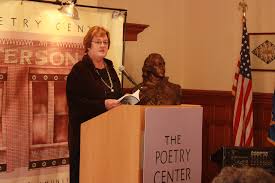
Vivian Shipley’s 12th full length collection of poetry, Hindsight: 2020 (Louisiana Literature Press, Southeastern Louisiana University, 2022) was just selected for the 2023 Paterson Poetry Prize Award for Sustained Literary Excellence from The Poetry Center at PCCC.
2023 Published in Paterson Literary Review, Issue 51, 2023
2022 Published in Connecticut River Review
2021-2022 Princemere Poetry Prize Finalist
2021 MacGuffin Poet Hunt 25 Prize Winner Reading
September 2020 Winner of Rattle’s Ekphrastic Challenge
2020 MacGuffin Poet Hunt Prize Winner
2020-21 Connecticut Commission on the Arts
Fellow in Poetry
2020-21 Paterson Poetry Prize Finalist
for An Archaeology of Days
2020 Palm Beach Poetry Festival Art Couture
Ekphrastic Poetry Contest Prize Winner
2018 Steve Kowit Poetry Prize Winner
from San Diego Art & Entertainment Guild
From An Archaeology of Days (Negative Capability Press, 2019)
Cargo
A plover with a broken wing flops
on the granite outcropping abutting
my seawall. At my computer, I cannot
avoid seeing it if I look out the window.
I can fold the newspaper on slaughters
in Syria, Myanmar, faces of children who can
no longer recognize their unveiled mothers
blown into concrete barricades or wedged under
car tires. To blot out this bird, I must lose
my view of Long Island Sound, my beach.
The bird hops, stumbles dragging feathers.
Closing my blind, I block out not only glare
but thought of the plover like the truck driver
in Laredo, South Texas who slammed rear doors
of his 18 wheeler on 73 illegal immigrants who
had crossed the Rio Grande by raft to stash houses.
Late July, 2017, the trucker knew air conditioning
did not work and the four vents were blocked.
On the interstate, sun-flash of semis, the cab cool,
in the back air was stale as a kiln, motion baked
out of it. The “King of Country,” George Strait’s
All My Exes Live in Texason the radio drowned
heels of hands pounding like ball-peen hammers
on the metal wall. No way to torch the doors open.
Stopping at Walmart in San Antonio to relieve
himself, the driver opened trailer doors to pitch
black. Clobbered by light, bodies were birds that
scattered like a pack of cards thrown up into air.
One man lurched out, ran to a customer to beg
for water. Too late to shut doors, the trucker feigned
surprise at the cargo. Ten people dead, those too weak
to stand, did not leave. I open the blind, my bird
is gone. Then, like the human tide from Mexico,
back over the wall of rock it comes. I can block out
the sight, but now like the trucker, I can’t ignore
its wing. What if the plover won’t go away to die?
I’d like to believe I have a heart unlike the driver who
shut that trailer tractor door. Drawn by the bird’s cries,
my dog leaps, straining to get on the beach. Knowing
what he will do, I’m tempted. Should I open the gate?
~ Vivian Shipley
Paterson Award for Sustained Literary Achievement
Vivian Shipley’s voice is compelling as she speaks for the women in her book. She gives word to their loss and loneliness, their passion, as well as her own. These poems fill the reader with a sense of wonder at the existence of such ordinary people, their extraordinary struggle and alienation, their grief and rebellious attitudes in the face of life’s tragedy.
— Stellasue Lee, RATTLE
In her haunting new book of poetry, Vivian Shipley effectively captures the striking voices of many people forgotten by history. All of Your Messages Have Been Erased (Louisiana Literature Press 2010) works to shift the balance of power in the fight between history’s selective ear, and the individuals who struggle to be heard.
— Adam Nunez, Blue Mesa Review
Not one poem in All of Your Messages Have Been Erased can be ignored and, as a result, we will not be able to erase the messages delivered in this book. This collection shows Shipley as a master poet, one of our finest. … Absorb the words, the music of Vivian Shipley’s language, that we are fortunate enough not to have to miss. This is a collection you will not want to miss.—Yanaguana Literary Review
We may seek the emotional lives of others in a theatrical drama, but Vivian Shipley never overlooks the significance of small things, even in the light of historical events.
— David Chorlton, FutureCycle Poetry
Email Vivian at: shipleyv1@southernct.edu
 Vivian Shipley